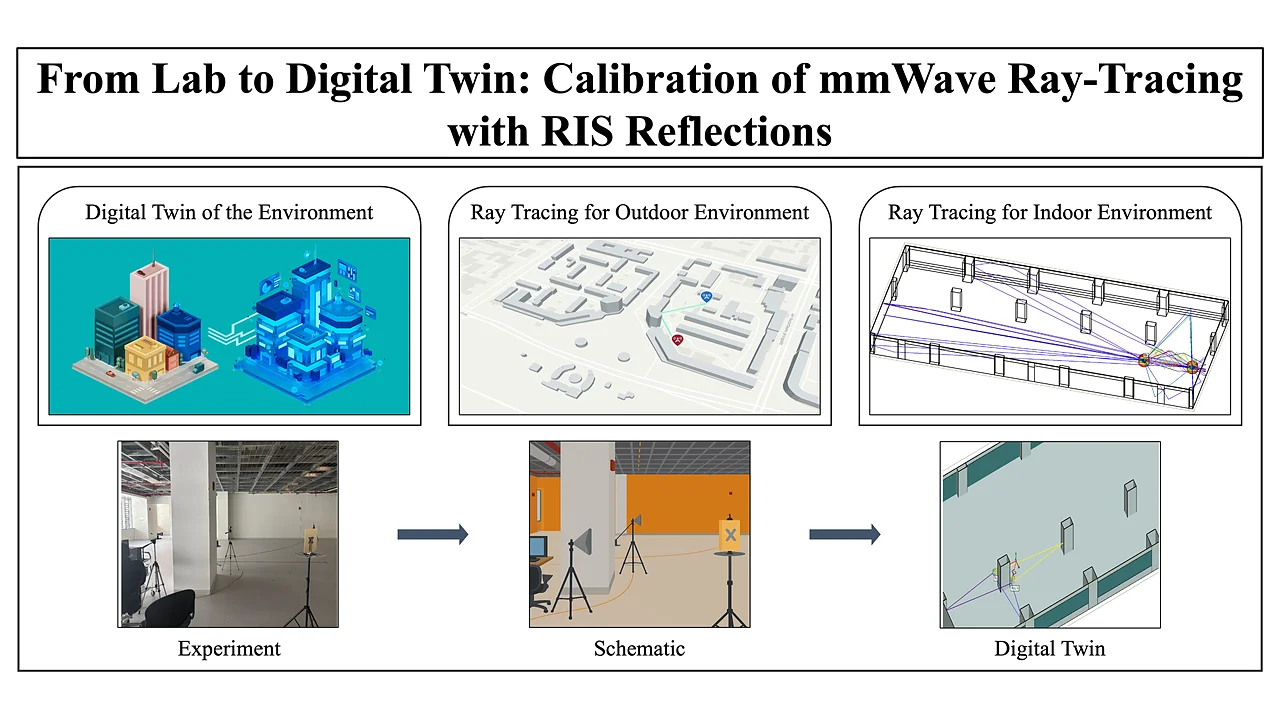
From Lab to Digital Twin: Calibration of mmWave Ray-Tracing with RIS Reflections
Overview
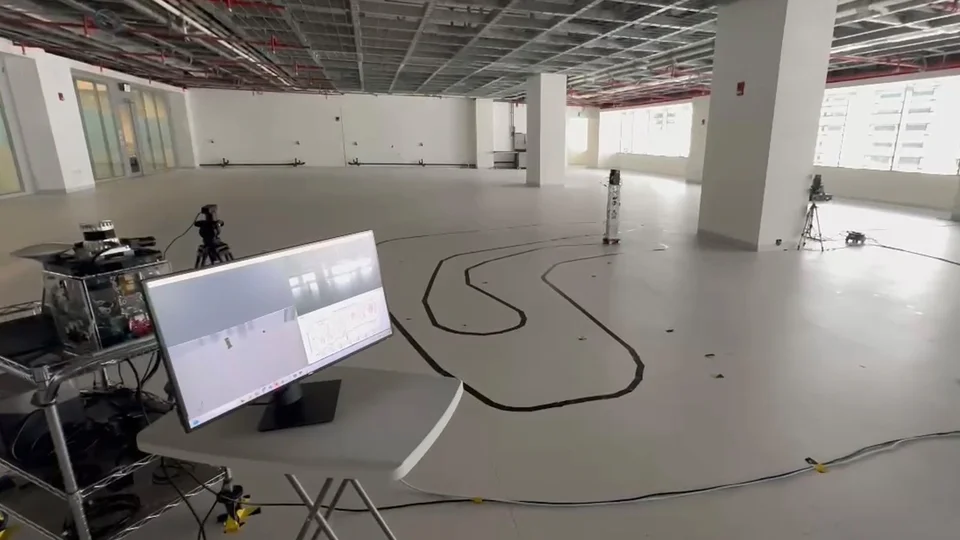
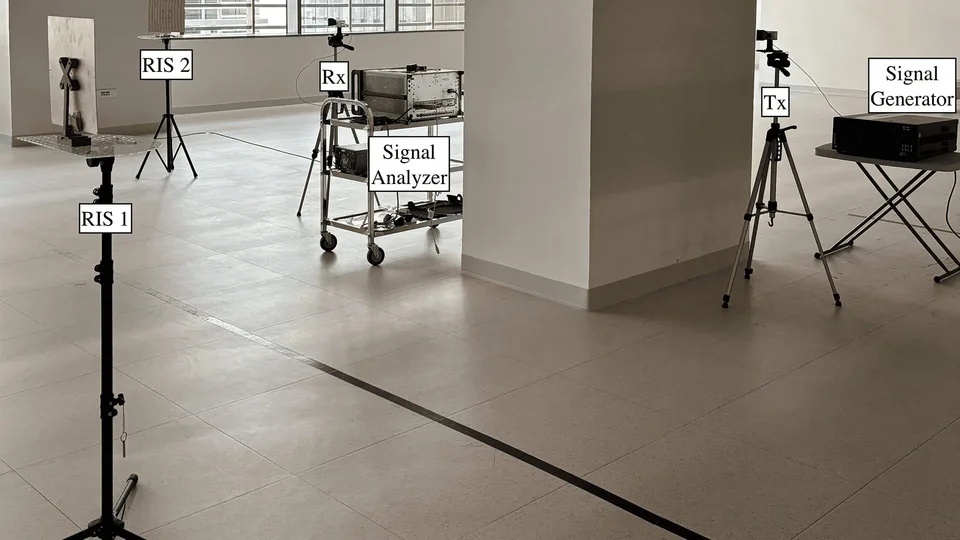
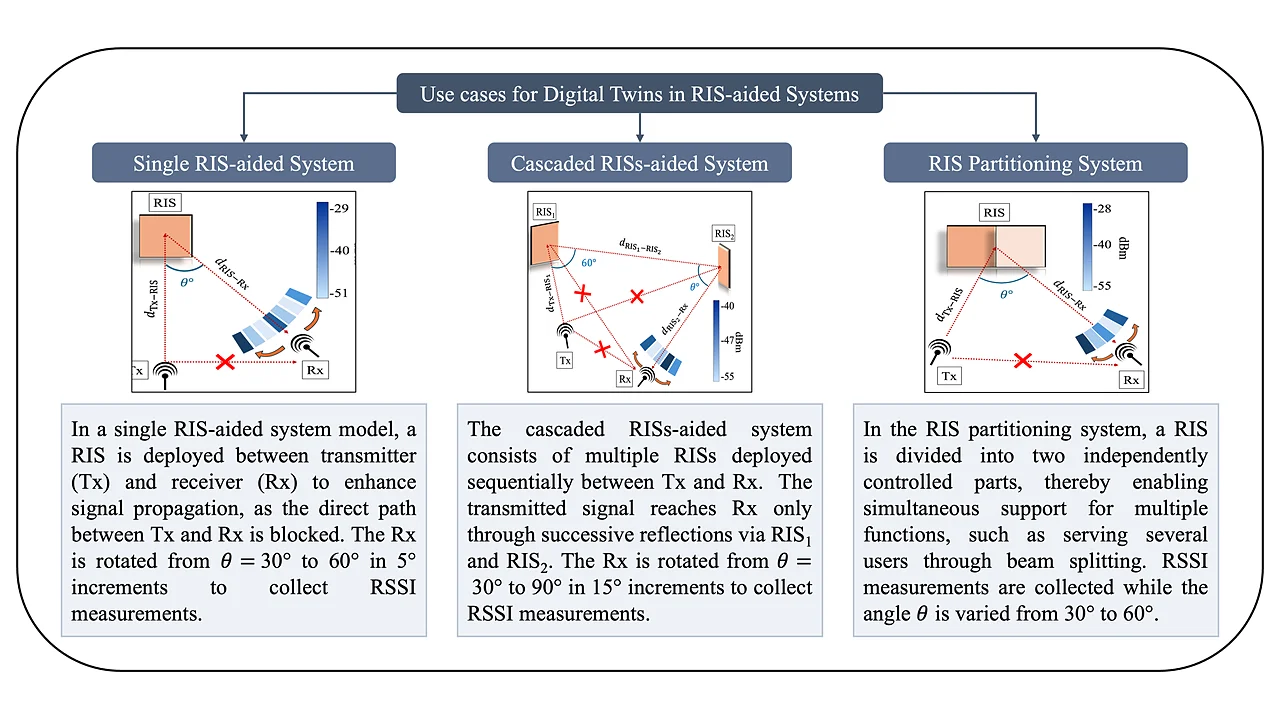
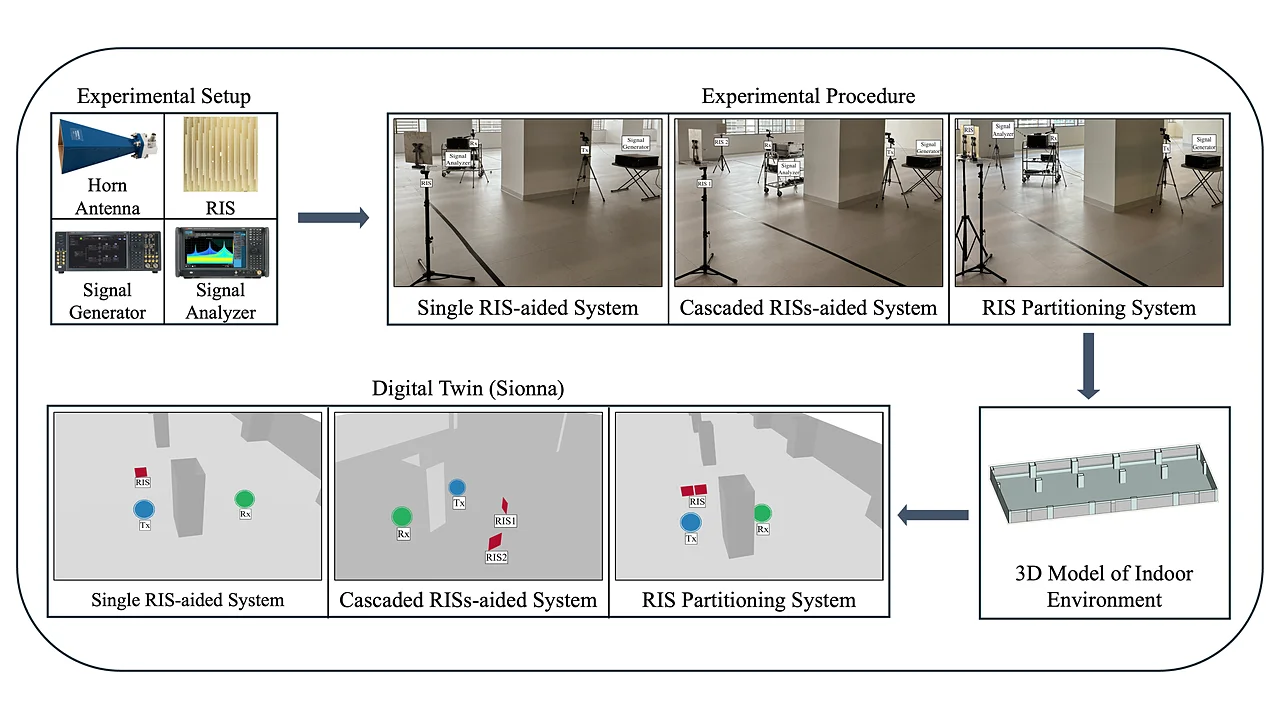
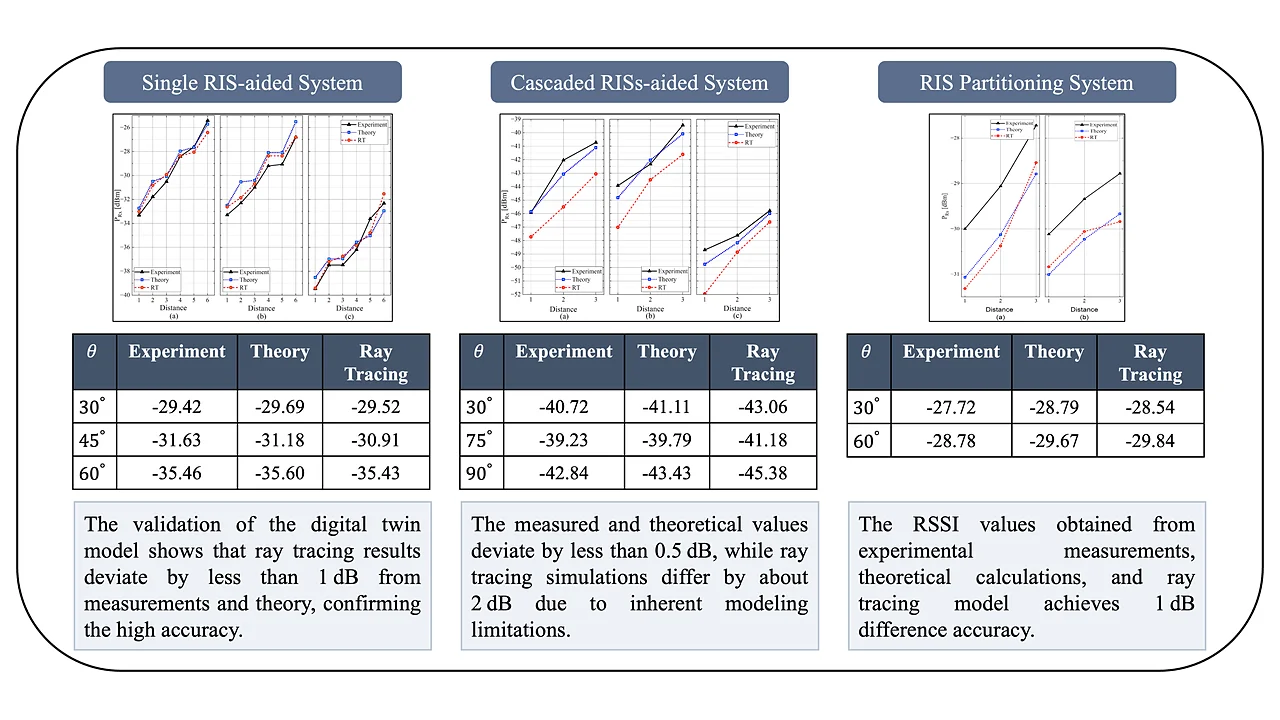
Beyond 5G networks are expected to deliver ultra-reliable, low-latency, and high-capacity connectivity. One of the key enabling technologies for achieving these goals is a reconfigurable intelligent surface (RIS), which is a programmable metasurface composed of many passive elements, each capable of adjusting the phase of incident signals. By intelligently controlling these elements, RIS can manipulate wireless propagation environment to enhance coverage, increase capacity, and improve energy efficiency. To accurately model the behavior of RIS within complex and dynamic environments, digital twins are used to capture realistic performance of RIS-aided systems. This work introduces digital twin framework for three RIS-aided systems in indoor environments: single RIS-aided, cascaded RISs-aided, and RIS partitioning. The proposed digital twin model is validated through experimental measurements and theoretical calculations, with performance evaluated in terms of the received signal strength indicator (RSSI).
System Model
Proposed Technique
Results
Video Explanation
How to download/use the Dataset
Copyright
•The data and results presented in this work are protected by copyright and may only be used with proper citation. Any use of this work should reference the following papers:
- Zhakipov, Z., Makin, M., Nasser, A., Abdallah, A., Celik, A., & Eltawil, A. M. (2025). From lab to digital twin: Calibration of mmWave ray-tracing with RIS reflections. Proceedings of the IEEE International Symposium on Personal, Indoor and Mobile Radio Communications (PIMRC) Workshop. IEEE.